


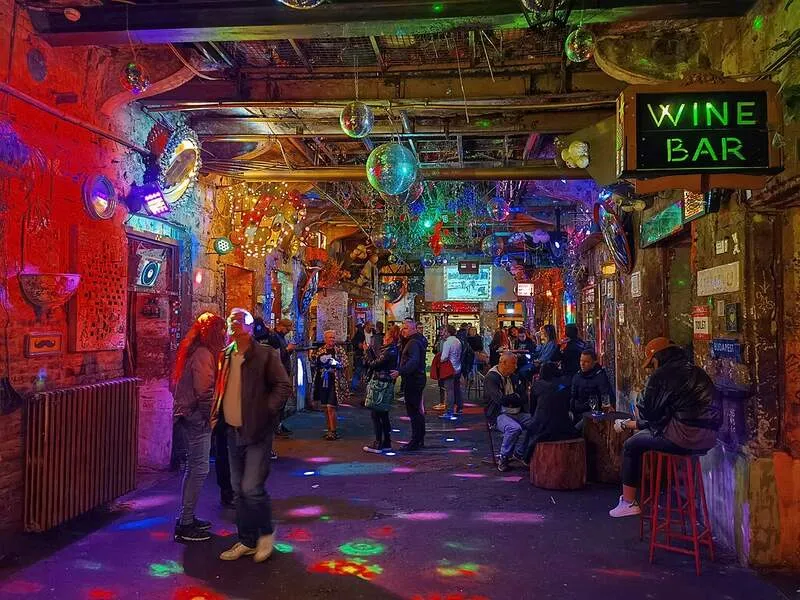
Budapest is a city of layers. You’ve got the grand, high-ceilinged coffee houses where writers used to spend their entire day on a single espresso, and then you’ve got the gritty, neon-lit ruin bars of the VII District. These are Hungary’s “Third Places”-those essential spots between the office and the front door. But walk into any café in 2026, and you’ll notice something different. People are there, sure, but their focus has shifted. The social buzz isn’t just coming from the table next to them; it’s coming from the device in their hand.
Sponsored content
The Portable Clubhouse
We used to think of “online” as a place we went to escape reality. Now, it’s where reality actually happens. For a lot of people in Hungary, especially the younger crowd in cities like Debrecen or Szeged, the traditional pub scene feels a bit… static. It’s loud, it’s expensive, and sometimes you just want the vibe without the sticky floors. This is where the digital “Third Place” stepped in. It’s not just about scrolling; it’s about finding a space that feels like yours.
What’s driving this? It’s the quality of the interaction. If a digital platform feels clunky or robotic, people bail immediately. They want the same “soul” they find in a local hangout. Interestingly, according to recent insights from Kinbet, the modern user is moving away from mindless consumption toward environments that offer actual engagement and a sense of community. It’s about that sweet spot where tech meets human intuition-where the interface doesn’t get in the way of the fun.
The shift happened faster than most expected. By mid-2026, the idea of a “digital living room” became the norm. It’s a place where you can be anonymous but still feel connected. To understand why this is beating out the old-school bar scene for many, you have to look at the “vibe” factor.
| Social Factor | The Classic Ruin Bar (2010s) | The Digital Hub (2026) |
| Commitment | You have to get dressed and commute. | Zero. Just tap the app. |
| Noise Level | Shouting over a DJ. | Your own playlist, your own terms. |
| Variety | Whatever is on tap. | A literal world of interactive options. |
| The “Crowd” | Whoever happens to be there. | A curated community of like-minded people. |
The Psychology of the “Safe Rush”
Humans are wired for excitement. It’s a biological leftover from when we had to outrun things in the woods. In modern-day Budapest, that urge for adrenaline hasn’t gone away; it’s just found a new home. People love a bit of risk, but they want it on their own terms. They want the “safe rush”-the thrill of a big play or a tight competition without any of the real-world grit that comes with physical venues.
This is why “Live” digital formats have absolutely taken over. It’s the closest thing we have to a shared social experience in the digital world. You’re not just playing against a machine; you’re part of a collective moment. There’s a dealer, there’s a chat, and there’s that shared tension that you used to only find at a packed table in a backroom.
But it only works if the platform treats you like a person. Nobody wants to feel like a data point. The best digital spaces in 2026 have figured out that “human-first” design is the only way to survive. This means:
- Real Talk: Support that sounds like a person, not a script.
- Zero Friction: If it takes more than two clicks to get where you’re going, it’s a fail.
- Fair Play: Transparency is the new luxury. People stay where they trust the math.
- Custom Vibe: The ability to tailor the experience so it doesn’t feel like a generic template.
Why Budapest is Leading the Charge
Hungary has always had a unique relationship with technology and social spaces. We’re a culture that loves to talk, debate, and play. As the city becomes more “smart” and interconnected, the physical Third Place is becoming an extension of the digital one, not the other way around. You’ll see groups of friends at a café, each on their own device, but they’re actually interacting in the same digital lobby. It’s “phygital”-a mix of both worlds that works surprisingly well.
The old argument that “tech makes us lonely” is dying out. If anything, these digital hubs are bridging gaps for people who can’t always make it to the city center. It’s a democratization of the social experience. You get the high-end tech, the community feel, and the excitement of a night out, all from your balcony overlooking the Danube.
The New Social Blueprint
So, where does this leave the traditional bars? They’ll always be there for the history and the atmosphere, but the “action” has moved. The digital Third Place is no longer a backup plan for a rainy night-it’s the primary destination. It’s faster, smarter, and honestly, a lot more fun when it’s done right.
The future of connection in Hungary isn’t about choosing between the “real” world and the “digital” one. It’s about realizing they’re the same thing now. Whether you’re looking for a quick hit of adrenaline or a long-term community, the walls are gone. The city is wherever you happen to be logged in. And in 2026, that’s exactly how we like it. The “Third Place” hasn’t disappeared; it just got a massive upgrade.
Disclaimer: the author(s) of the sponsored article(s) are solely responsible for any opinions expressed or offers made. These opinions do not necessarily reflect the official position of Helló Magyar, and the editorial staff cannot be held responsible for their veracity.