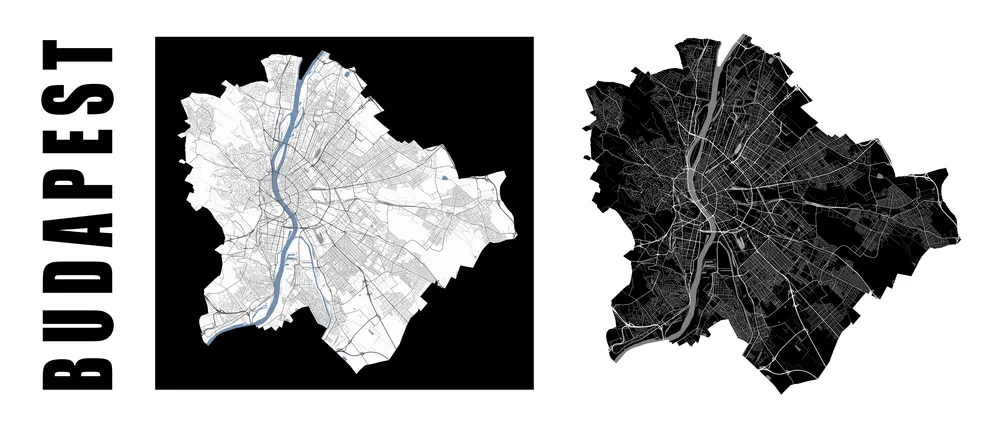
Buda or Pest? It is one of the first questions travellers face when planning a trip to Hungary’s capital – and choosing the right side of the Danube can noticeably change the experience.
For most first-time visitors, Pest is the more practical choice. It is flatter, busier and packed with restaurants, nightlife, major attractions and some of Budapest’s most useful public transport hubs. Buda, meanwhile, is hillier, greener and generally better suited to travellers looking for historic atmosphere, panoramic views and quieter evenings. Budapest’s official tourism portal similarly describes Buda as the hilly side of the capital, contrasting it with the much flatter geography of Pest.
But the simple answer – “stay in Pest, visit Buda” – does not work for everyone. Couples, families, hikers and returning visitors may find that Buda suits them much better.
Here is how to decide.
Buda or Pest: the quick answer
If this is your first trip to Budapest and you have only two or three days, choose Pest.
If you are coming primarily for bars, restaurants and nightlife, choose Pest.
If you want to be within walking distance of the largest concentration of central attractions, Pest is generally easier.
If your ideal trip involves Buda Castle, historic streets, views over Parliament and quiet evenings, choose Buda.
If you are travelling as a couple and want a more romantic atmosphere, Buda has a strong advantage.
If parks, hills and access to nature are important, Buda again comes out ahead: the official Budapestinfo guide to Buda highlights the Buda Hills and areas such as Normafa as major recreational destinations.
The good news is that this is not Paris versus Versailles. The two sides face each other across the Danube and are connected by bridges, metros, trams and buses. Choosing one does not lock you out of the other.
What is actually the difference between Buda and Pest?
Modern Budapest was created in 1873 through the unification of Buda, Pest and Óbuda. The Chain Bridge, opened in 1849, had already provided the first permanent bridge connection between Buda and Pest and became one of the symbols of their eventual union, as explained in Daily News Hungary’s history of Budapest landmarks.
The Danube still creates a very visible divide.
Buda lies west of the river. Its terrain rises quickly from the riverbank, with Castle Hill, Gellért Hill and eventually the Buda Hills giving this side a much more varied landscape.
Pest lies east of the Danube. It is substantially flatter and contains much of the dense urban centre familiar to short-break visitors.
That difference in geography partly explains the personality of the two sides. Pest lends itself to walking between restaurants, bars, shops and sights. Buda rewards travellers who are happy to climb, use public transport and slow the pace down.
Pest wins for first-time visitors
For somebody arriving in Budapest for the first time, Pest is usually the safest recommendation.
Some of the capital’s best-known attractions are on this side, including the Hungarian Parliament, St Stephen’s Basilica and the historic Jewish Quarter. Budapest’s official tourism website lists these alongside the Buda Castle District among the city’s major visitor highlights.

The advantage is not simply the number of sights. It is how closely many of them sit together.
Visitors staying around District V can walk between the Danube, Parliament, the Basilica, Vörösmarty Square and the Chain Bridge area without repeatedly using public transport. Budapestinfo describes Vörösmarty Square in District V as the heart of downtown Budapest.
And when your itinerary does require transport, central Pest contains several of the network’s most useful interchanges.
That makes Pest particularly effective for a 48- or 72-hour city break, where half an hour saved each morning and evening can translate into substantially more sightseeing.
Pest also wins for nightlife
This contest is considerably less close.
For nightlife, Pest is the clear winner.
The historic Jewish Quarter in District VII has become one of the centres of Budapest’s evening economy, with bars, restaurants and entertainment concentrated around streets including Kazinczy Street. Budapest’s official tourist service specifically describes Kazinczy Street as an entertainment quarter and highlights the wider Terézváros and Erzsébetváros area for visitors.

The city’s official tourism portal also promotes the Jewish Quarter for its ruin pubs and nightlife alongside its important synagogues and Jewish heritage.
This does not mean Buda goes to sleep at sunset. There are restaurants, bars and cultural venues on the western side too.
But visitors coming to Budapest specifically for ruin bars, late dinners and busy streets will find the experience concentrated overwhelmingly on Pest.
There is one downside: noise.
Where you stay within District VII can matter enormously. A hotel or apartment beside a busy nightlife street can offer an entirely different experience from one only a few blocks away.
For travellers who want to party but still sleep, the edges of District V, VI or VII may be a better compromise than staying directly above the nightlife.
Buda wins for history and views
Cross the Danube and the equation changes.
The Buda Castle District is one of Budapest’s defining historic areas. The official Budapestinfo guide lists attractions including the Hungarian National Gallery, Budapest History Museum and National Széchényi Library within the Castle complex, while Matthias Church and the surrounding historic streets are among the wider district’s major draws.
This is Budapest at its most cinematic.
From elevated Buda, visitors can look across the Danube towards Parliament and Pest. In the evening, after many day visitors have left the Castle District, the atmosphere can feel remarkably different from central Pest.
Buda is therefore particularly appealing to couples and anyone whose idea of a city break involves architecture, photography and long walks rather than staying within a few minutes of bars.
Being on a hill does not mean the Castle is difficult to reach. Buses 16, 16A and 116 provide access to the Castle area, including connections from major transport points.
So the real disadvantage is not isolation. It is that you are less likely to step outside your hotel and find the density of restaurants and nightlife available in central Pest.
Which side is better for couples?
For a romantic Budapest weekend, Buda probably wins – but only narrowly.
The combination of Castle Hill, Danube panoramas, historic streets and quieter evenings gives it an atmosphere that is difficult to reproduce on the Pest side. The official tourism organisation describes the Buda Castle District as one of the capital’s most popular areas for its panoramas, historic buildings and narrow streets.

There is also a simple pleasure in crossing the Chain Bridge towards Pest for dinner and returning to Buda later in the evening.
However, couples who define romance through restaurants, cocktail bars, cafés and being in the middle of city life may prefer District V or VI on the Pest side.
Our verdict is therefore:
Buda for views and atmosphere. Pest for food and city life.
Which side is better for families?
This is more complicated.
Buda’s quieter character can be attractive to families, particularly those staying longer than a weekend. Access to greener areas is another significant advantage. Budapest’s western side leads towards the Buda Hills and outdoor destinations such as Normafa.
However, the hills themselves can become a disadvantage with very small children, pushchairs or anyone with limited mobility.
Pest is flatter and can reduce the amount of effort involved in sightseeing.
Families should also consider Margaret Island, which sits in the Danube between the two sides rather than fitting neatly into either camp. The island as a 96.5-hectare, 2.5-kilometre-long park and one of Budapest’s major recreational spaces.
For families staying several days, accommodation in northern Pest around District XIII can provide easy access to Margaret Island while retaining the advantages of Pest’s flatter geography.
For a first family visit, Pest probably has a slight practical advantage. For a slower holiday, Buda becomes much more competitive.
Which side is easier from Budapest Airport?
Pest wins decisively.
The 100E Airport Express runs between Budapest Ferenc Liszt International Airport and Deák Ferenc tér in central Pest via Kálvin tér, and according to transport authority BKK, the service operates 24 hours a day, seven days a week.
The standard airport shuttle ticket currently costs HUF 2,500 (about EUR 6.90).

That gives central Pest a considerable advantage after a late flight. If your accommodation is close to Deák Ferenc tér or Kálvin tér, you can potentially leave the airport bus and walk directly to your hotel.
Travellers staying in Buda will generally need an onward connection or another form of transport after reaching the city.
For more detail on fares, validation, trams, metro lines and airport travel, see our complete 2026 guide to Budapest public transport.
Does Buda or Pest have better public transport?
For tourists, both are well connected, but Pest has the edge for convenience.
The reason is not simply that it has metro lines. Pest’s dense centre combines metro, tram and bus routes with major interchanges, making it easier to reach several visitor areas without complicated journeys. BKK provides both daytime and night services throughout Budapest, and significantly reorganised the night network from July 2026 to improve coverage and connections. (BKK)

One particularly useful service for tourists is tram 6 on the Grand Boulevard, which operates around the clock, as noted in Daily News Hungary’s public transport guide.
Buda remains straightforward to navigate by public transport, particularly around major nodes such as Széll Kálmán tér and Batthyány tér. But travellers staying higher in the hills or farther from the river will rely more heavily on buses.
If you like exploring a city primarily on foot, central Pest is easier.
What about safety: is Buda safer than Pest?
Travellers should be careful about reducing Budapest safety to a Buda-versus-Pest contest.
The capital does not have a simple division where one half is “safe” and the other is “dangerous”. The more relevant issues for visitors are the exact neighbourhood, time of day and type of activity.
As our updated guide to Budapest areas tourists should know about explains, the realistic risks are typical big-city problems such as pickpocketing, theft, scams, excessive drinking and occasional late-night incidents rather than entire central districts that tourists must avoid.
Central Pest naturally has more nightlife and larger late-night crowds, so visitors may encounter more alcohol-related disturbances there simply because that is where much of the evening activity occurs.
Buda often feels quieter at night, but that should not be confused with a blanket safety guarantee.
For accommodation, looking at the specific street and transport route is far more useful than choosing Buda solely because it appears calmer.
Buda or Pest for food?
For sheer choice and density, Pest wins.
Central Pest puts visitors close to the Jewish Quarter, downtown District V, Andrássy Avenue and numerous restaurant and café streets. The official tourism portal highlights both the restaurant and entertainment offer of the Jewish Quarter alongside its cultural heritage.
Buda has excellent restaurants too, and travellers looking for calmer dining may prefer it. But restaurants tend to be more dispersed compared with central Pest.
For somebody who wants to leave the hotel without a plan and choose between dozens of nearby restaurants, Pest is the easier option.
Buda or Pest if you have already visited Budapest?
This is where our recommendation changes.
Returning visitors should seriously consider Buda.
On a first trip, efficiency matters. You probably want Parliament, the Basilica, the Castle District, the Jewish Quarter, the Danube and perhaps a thermal bath squeezed into a few days.
On a second or third visit, being five minutes farther from the classic sights matters much less.
Buda gives visitors easier access to the hills, residential neighbourhoods and a slower side of the capital. Budapestinfo specifically promotes hiking in the Buda Hills as one of the city’s outdoor experiences.
It can therefore reveal a version of Budapest that short-break tourists staying around Deák Ferenc tér often miss completely.
Buda versus Pest at a glance
| If your priority is… | Choose |
|---|---|
| First visit | Pest |
| Two- or three-day trip | Pest |
| Nightlife | Pest |
| Restaurants and bars | Pest |
| Airport convenience | Pest |
| Maximum walking convenience | Pest |
| Historic atmosphere | Buda |
| Panoramic views | Buda |
| Romantic weekend | Buda |
| Quiet evenings | Buda |
| Hills and nature | Buda |
| Returning visit | Consider Buda |
| Travelling with children | Depends on location |
Where should you actually stay?
If you have never been to Budapest before and simply want somebody to make the decision for you: stay in Pest, preferably somewhere central.
District V is the easiest option for sightseeing and short visits. District VII works best for nightlife, while District VI offers a compromise between the two. Pest also gives visitors the simplest connection to the airport via the 100E Airport Express.
If you have already visited Budapest, are travelling as a couple or want your accommodation to feel like a retreat from the busiest streets, look seriously at Buda, particularly around the Castle District or the river-facing neighbourhoods below it.
Travellers who want luxury accommodation on either side can also compare our 10 best luxury hotels in Budapest for 2026.
The verdict: Buda or Pest?
For most tourists, Pest wins on convenience, while Buda wins on atmosphere.
Pest gives first-time visitors more restaurants, nightlife and central sightseeing within an easily walkable area, as well as simpler airport connections. Buda counters with hills, greenery, historic streets and some of Budapest’s most memorable panoramas.
But perhaps the best way to experience Budapest is not to treat the Danube as a border at all.
Stay on the side that matches the rhythm of your trip – then cross the river often.
After all, Budapest’s greatest advantage is that visitors do not really have to choose between Buda or Pest. The Chain Bridge and the city’s public transport system put both within easy reach, which means you can wake up among Buda’s hills, have lunch beside Parliament in Pest and watch the sun set from the opposite bank before the day is over.
Read more news about Budapest here: